
Dancehall (Jamaican Dance) – Jamaica
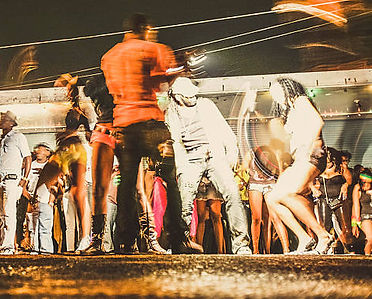
A ritual of body and bass, social resistance and erotic power, embedded in a mythic choreography of urban survival and self-stylization
Thinking Through Claude Lévi-Strauss (1908–2009)’s work, La Pensée Sauvage
Introduction
Dancehall, emerging from Jamaica in the late 1970s, is not only a genre of music—it is a choreographic ecosystem deeply interwoven with Jamaican history, identity, and social critique. Dancehall dance is known for:
Explosive, sensual, and innovative moves,
Emphasis on hip isolations, pelvic thrusts, and footwork,
Styles that are both individualistic and communal, often named after creators or neighborhoods,
Gendered dynamics, with female dancers often embodying “slackness” (sexual expressivity) and male dancers showing agility, control, and symbolic dominance.
While often seen through a commercial or sensational lens, from a Claude Lévi-Strauss perspective, Dancehall dance is a modern myth system—a kinetic response to postcolonial trauma, class hierarchy, spiritual dislocation, and urban agency. It is a ritual of survival, where bodies translate contradiction into motion, crafting an embodied grammar of power, desire, and voice.
Dancehall as Bricolage: Myth-Making from Street Culture
In The Savage Mind, Lévi-Strauss describes the bricoleur as a mythic craftsman, using available tools to build meaning. Dancehall dance draws from:
African retentions (Kumina, Dinki Mini, Nyabinghi), reassembled in urban slang and rhythm,
American pop, hip hop, and cinematic influences,
Everyday life gestures—brushing off dust, winding car windows, mimicking gunshots, cleaning floors,
Street names, dance crews, nicknames, each attached to specific moves (e.g., "Dutty Wine", "Gully Creeper", "Willie Bounce").
This dance is a bricolage of urban experience—a system where every move is a social statement, and the dancer’s body becomes a living archive of survival under pressure.
Binary Oppositions: Spirit ↔ Body, Rebellion ↔ Ritual, Sensuality ↔ Structure
Dancehall’s power lies in its structural contradictions, ritualized through motion:
Binary Opposition Ritual Reconciliation
Sacred / Profane Slackness is expressed as celebration, not desecration
Poverty / Sovereignty Dancers in informal settlements turn bodily motion into social capital
Individual / Collective Solo styles thrive within a choreographed crew framework
Masculine / Feminine Gendered moves dialogue and compete, not cancel
Control / Release Chaotic appearance hides disciplined practice and aesthetic structure
Lévi-Strauss emphasized that myth exists to organize, not resolve, these oppositions. Dancehall dance encodes these tensions into form, making them visible, sensual, and socially felt.
The Body as Archive: Dance as Sonic Writing
Dancehall dancers write their identities with:
Pelvic thrusts and isolations that challenge colonial and Puritan control over Black sexuality,
Explosive footwork that mimics urban instability, yet asserts presence,
Gestures that speak language without words—a semiotic system of embodied poetics.
Lévi-Strauss believed myth is written in gestures, costumes, and rituals—Dancehall is an urban cosmogram, where the dancer is both scribe and scripture, telling stories of power, gender, danger, and joy through torque and time.
Structure and Event: Naming, Repetition, Evolution
Dancehall dances are:
Often named after people or social references (e.g., “Bogle” after the legendary dancer Gerald Levy),
Built around signature sequences, repeated in battles and parties,
Transmitted across space and generations, becoming ritual motifs.
Each move may begin as improvisation, but once named and codified, it enters the canon of cultural memory. This reflects Lévi-Strauss’s view that event becomes myth through structural absorption.
Thus, the “Gully Creeper” is not just a move—it is a ritual unit in a system of urban mythology.
Bass, Breath, and Drum: Sonic Structure as Embodied Blueprint
Dancehall dancers move to:
Heavy bass lines and riddims, which serve as temporal scaffolding,
Syncopated vocal patterns, often delivered in rapid-fire patois,
Beats that demand embodiment—to listen is to move.
Lévi-Strauss noted that music shares myth’s formal structure: rhythm, motif, variation, return. Dancehall’s music is not just backdrop—it is ritual structure, shaping the timing, focus, and emotion of movement.
Ritual and Resistance: Street as Sacred Space
In the Dancehall:
Concrete becomes altar,
Dancers enact sovereignty through skill, innovation, and style,
The ritual of the “forward” (cheer from the crowd) functions like affirmation from gods.
It’s also a space of spiritual contradiction:
Some dancers invoke Obeah, Zion, or biblical references,
Others use sexuality or aggression to claim the sacred right to presence.
Lévi-Strauss would interpret this as modern totemism—a dance cosmology where each dancer is a mythic animal, a totemic node of urban spirit, claiming space through style.
Global Spread and Cultural Mutation: The Myth Becomes Many
Today, Dancehall is:
Global—visible in pop stars’ choreography, dance studios worldwide, and viral trends,
Hybrid—merging with Afrobeats, hip hop, K-pop, and EDM,
Reclaimed—by queer artists, feminist crews, and diasporic communities as ritual of liberation.
Even as it transforms, the structure persists:
Naming dances,
Challenging norms,
Ritualizing rebellion.
Lévi-Strauss would assert that as long as the dance maintains its mythic grammar—gesture, naming, sound, and circle—it remains a living myth, evolving but enduring.
Conclusion
From a Lévi-Straussian perspective, Dancehall is a mythic choreography of postcolonial existence. It is ritual rebellion, erotic cosmology, and kinetic sovereignty—not chaos, but form masquerading as frenzy.
It encodes the lived tensions of survival into symbolic form, giving bodies—especially Black bodies—the right to myth, spectacle, and authorship.
In every spin, whine, bounce, and stomp, Dancehall tells us:
“We are alive. We are loud. We are myth in motion.”