
Dastangoi – Tilism-e-Hoshruba (India/Pakistan)
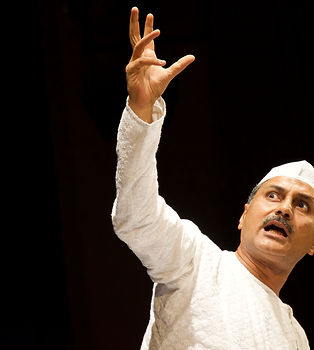
– A Persianate Mughal oral storytelling art that blends heroism, romance, magic, and Sufi ethics. Revived in the 21st century, Dastangoi performers recount epic tales in Urdu, often without props or scenery, relying solely on voice, memory, and presence.
Thinking Through Michel Foucault (1926-1984)’s Philosophy on the Art Essence
Foucault’s vision of ethics moves away from universal moral rules toward a practice of self-formation through aesthetics—the shaping of life into a work of art. Dastangoi exemplifies this: the storyteller becomes the weaver of selves, constructing not only characters but modalities of subjectivity in their listeners.
The tale of Tilism-e-Hoshruba—with its magical battles, labyrinthine plots, shapeshifting heroes, and demonic illusions—is more than fantasy. It’s a field of ethical reflection. The audience is drawn into a world where appearances deceive, power tempts, and the hero must learn discernment, restraint, and inner clarity. Foucault’s idea that truth is a lived experience rather than a doctrinal certainty resonates here: each Dastango narrates not from a script, but from a lifetime of memorization and internalization, offering truth as performance.
The storyteller’s body becomes a technology of the self—trained in inflection, pacing, dramatic breath, and emotional modulation. The self becomes ethical not through withdrawal, but through discursive participation: the shaping of words shapes the self. The tale becomes a mirror of self-care—paradoxically, the more one gets lost in it, the more one finds oneself.
Furthermore, Dastangoi as a revived practice critiques the colonial silencing of Eastern storytelling forms. It is thus also a parrhesiastic act—a reclaiming of cultural memory through oral truth. The Dastango is both performer and philosopher, inviting the listener into a Sufi pedagogy of the soul, where each twist in the tale is also a turn in the labyrinth of inner transformation.