
Basilica of San Zeno Bronze Doors
c. 12th century CE – Italy
Thinking Through Martin Heidegger (1889-1976)’s “The Origin of the Work of Art”
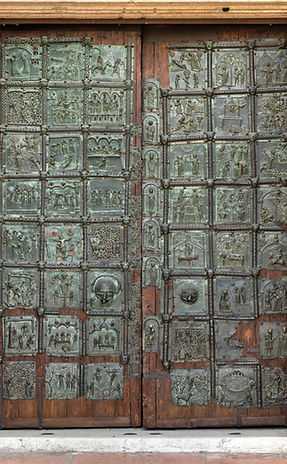
The bronze doors of the Basilica of San Zeno are narrative fields—panels depicting biblical stories with expressive, almost naive abstraction. Heidegger would view these doors not as illustrative but as thresholds where world is formed and entered.
Each panel is not a window onto history but a stone of the temple: a piece of a world where salvation history enters daily life. These doors, opening and closing, enact the ritual of world-maintenance. They are not art to be admired but things to be used—but their utility is not neutral. It is a way of letting-being. Every time they are pushed open, a sacred world is revealed anew.
The earth here is strong: the bronze is dark, oxidized, heavy. Its unevenness resists polish. And yet, the figures—Adam and Eve, Noah, saints—emerge. The world of faith takes form in distortion—not classical idealism, but existential urgency. These are figures of need, of proximity to the divine, not of aesthetic balance.
For Heidegger, this strife—between awkward material and salvific clarity—is where truth stands. The doors are not barriers; they are beings that let passage be, not only spatially, but ontologically.