
Giovanni Pierluigi da Palestrina – Missa Papae Marcelli
1562
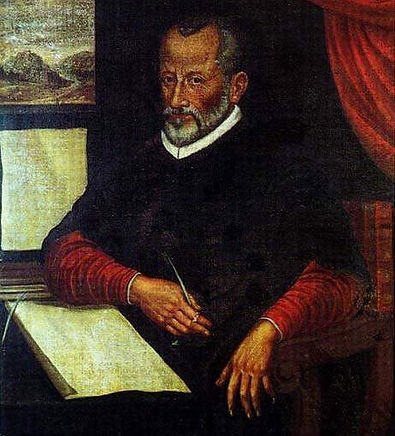
Theme: Sacred equilibrium, Apollonian order, divine representation
Visual/Musical Essence: A six-part a cappella Mass designed for clarity and polyphonic grace; famously attributed (though apocryphally) to having “saved” polyphony at the Council of Trent due to its clarity of text and devotional purity
Thinking Through Friedrich Nietzsche (1844-1900)’s Philosophy on Art Essence
This music does not seduce. It does not intoxicate. It elevates. Palestrina’s Missa Papae Marcelli represents the perfection of the Apollonian aesthetic will, and Nietzsche would approach it like one gazing at a Greek temple—with reverence for its harmony, yet with suspicion toward its abstraction from life.
The Mass is smooth, celestial, frictionless. Each vocal line interweaves with the others in weightless equilibrium, like stars rotating in a Platonic cosmos. No sharp dissonances pierce the veil. No dramatic outbursts disturb the peace. And this, Nietzsche would note, is the triumph of form over instinct, of semblance over raw Being.
In The Birth of Tragedy, Nietzsche argues that the Apollonian dream masks the terror of existence by offering surface, clarity, illusion. Missa Papae Marcelli is just such a dream: it does not acknowledge suffering. It suspends it. It builds a world in which suffering never intrudes. This is not the Dionysian chorus crying out in ecstasy and dread—it is a cool chorus of angels, hovering above the human mess.
Yet Nietzsche would not dismiss this as merely repressive. He would say: Here is the noble will to style reality into something bearable. For while Dionysian music affirms chaos, Apollonian music affirms form itself—and that too is a kind of strength.
“It is only as an aesthetic phenomenon that existence and the world are eternally justified,” he writes.
This Mass does not justify life by embracing its violence. It justifies life by offering an image of what it could be if only it were as pure as this sound. It is not natural, but idealized—and in that idealization, there lies an ethics of restraint, a desire for redemption through structure.
The sanctity of Palestrina’s polyphony lies in its impersonal sublimity. The composer disappears. The drama is erased. Only the ideal sonic architecture remains—a palace of air, light, and breath. Nietzsche would see in this not cowardice, but a kind of heroic sublimation: a refusal to fall into despair by creating a sound-world so balanced it seems eternal.
And yet—he would ask: At what cost?
The Mass silences the instincts. It exiles the animal. It removes the tremor, the flesh, the fever of Being. It saves polyphony, yes—but at the risk of hollowing out the Dionysian core. Nietzsche would respect its form, admire its clarity, even marvel at its technique—but he would also feel the ghost of suffering repressed, of passion starved for the sake of beauty.
Still, this repression is not weakness. It is style raised to spiritual weaponry. Palestrina does not flee life. He refashions it into a harmonious dream—precisely what Nietzsche identifies as Apollonian nobility.
“The noble soul has reverence for itself.”
And here, we hear that reverence—for voice, for structure, for sacred space. Missa Papae Marcelli is a sonic cathedral, not built to overwhelm, but to quiet the chaos.
It is not a tragic work. But it is not naïve. It is what happens when a civilization still hungers for the divine, but seeks it through order, not ecstasy.
Nietzsche would bow to it—not because it affirms all of life, but because it dares to create a form so precise, so balanced, that it allows one to believe, for a moment, that suffering can be overcome by beauty alone.